
Hopsan -easy to handle- System Simulation
Hopsan, developed by Linköping University, is a versatile open source platform for dynamic system simulation, with a focus on hydraulics, mechanics, and control systems. Its modular, component-based approach allows engineers to model complex fluid power circuits, test control strategies, and validate designs. All without proprietary software!
In my point of view, Hopsan bridges the gap between academic research and industrial applications. Whether you’re optimizing hydraulic actuators or teaching system dynamics, this tool offers flexibility, transparency, and a growing community of users.
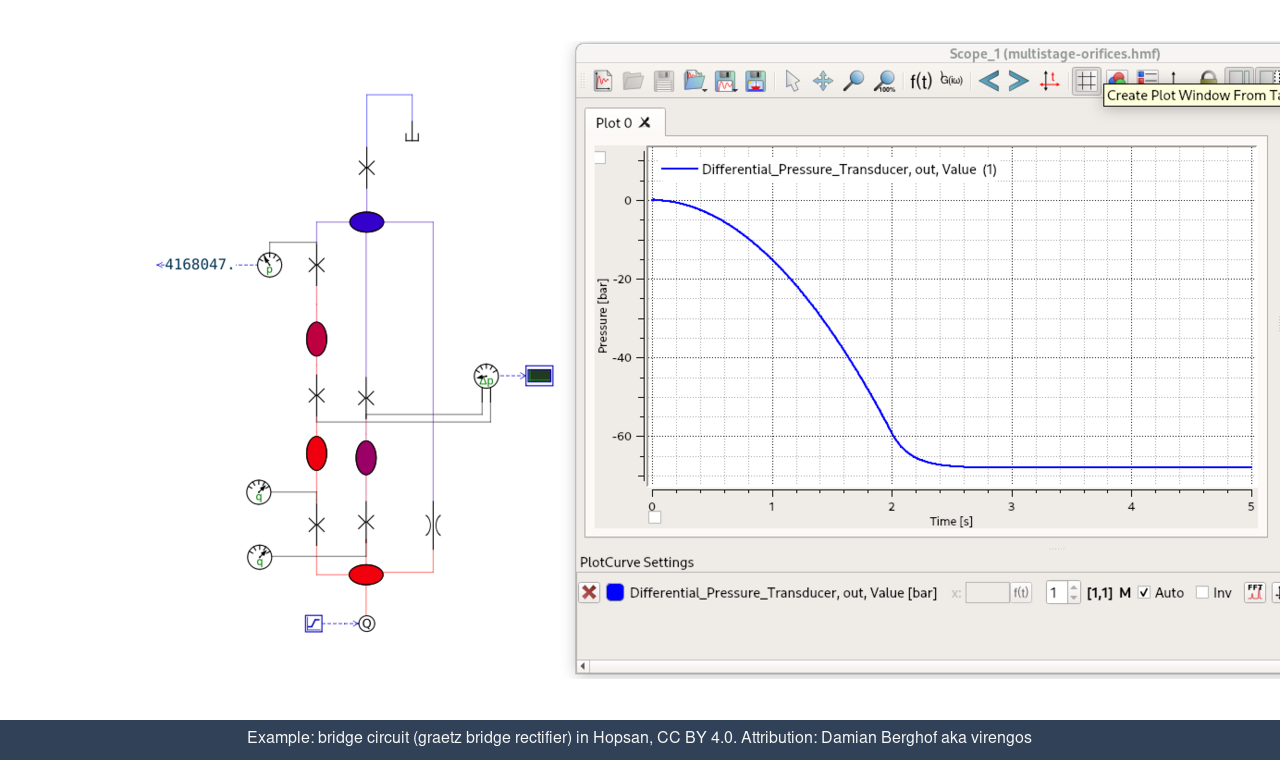
The animation above (click it to start) shows compact hydraulic bridge circuit (graetz bridge rectifier) example showcasing Hopsan’s key features and strengths.
As a template, I used a clear and practical example from HAWE Hydraulik SE, adapting it slightly to fit this context.
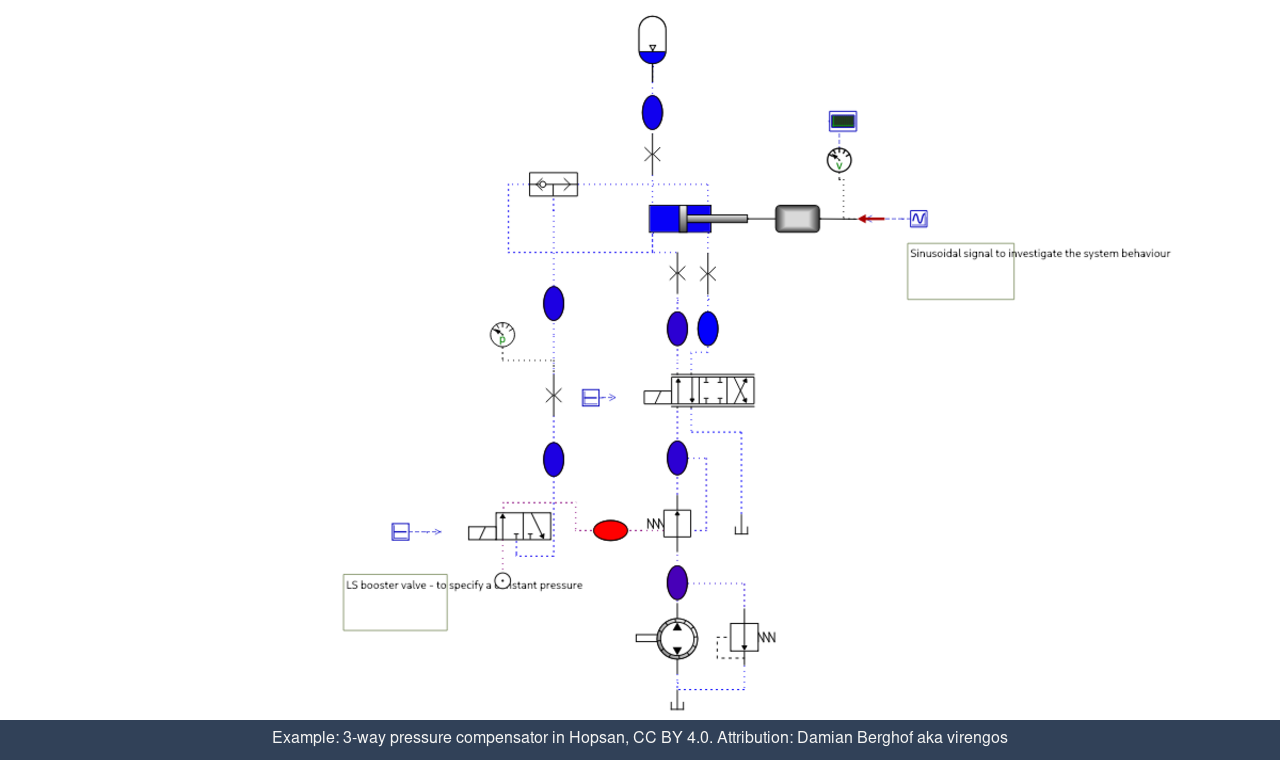
This simple yet powerful demo highlights Hopsan’s ability to model dynamic hydraulic systems, visualize pressure flows in real time, and seamlessly integrate custom components. From parameter sweeps to control logic testing, the example underscores why Hopsan is a go-to tool for fluid power engineers and researchers alike.
Try it yourself!
The team at Linköping University provides excellent tutorials and documentation on the Hopsan website, answering most questions right away.
For those looking to dive deeper into Hopsan’s development or to ask the core team directly. The GitHub repository is the place to go.
I’ve also set up a GitHub repository with small, practical examples from the world of hydraulics. Hope you find it useful!
One of its standout features?
Hopsan combines clean, intuitive model programming with the ability to run headless simulations via the console (cli), exporting data directly to e.g. CSV files. This makes it not only easy to learn but also ideal for automation and integration into larger workflows—all while staying open source and blazing fast.
Of course, I’ve already put it to the test. Running it seamlessly in the Rocky Linux trminal.
$: hopsan.cli -m "graetz-circuit.hmf" -s hmf --resultsFullCSV testdata.csv
Installation
From my experience, I can confirm that installation runs smoothly on both Ubuntu Linux and Windows 11. You can find the installation files.
For Rocky Linux 9.7, I opted for the snap installation, which worked flawlessly. I expect the process to be just as seamless on AlmaLinux or RHEL, given their compatibility.
What’s Next?
Currently, I’m working on additional practical examples focused on hydraulic circuits for mobile machinery, such as: tractors, excavators, and forestry cranes. To further highlight the strengths of Hopsan.
My goal is to inspire more users to join our community, contribute, and create additional training materials together.
At the same time, I’m diving into basic modeling with Hopsan by using C++. Thanks to the excellent documentation, I’m confident this will be a smooth and productive journey!
Have questions or suggestions?
Don’t hesitate to reach out, I’m happy to help! The best way to contact me is via email or directly on LinkedIn. Looking forward to connecting!
Updates
2026-01-01
tbd
Further Reading
Disclaimer
Free and Open Source Software (FOSS)
I rely on Free and Open Source Software (FOSS), where “free” refers to liberty, not price—for simulations, automation, and engineering workflows. FOSS guarantees the four essential freedoms (use, study, share, modify) as defined by the Free Software Foundation.
License Notices
Unless stated otherwise, my scripts and code examples (e.g., on my GitLab / GitHub repositories) are typically licensed under the MIT License to encourage reuse and learning. Always check the individual license files in repositories before using code—especially for commercial applications. Compliance with license terms (attribution, restrictions, etc.) is your responsibility.
Purpose and Liability
My examples are practical, simplified demonstrations designed for educational sharing, not production use. They reflect my best knowledge but are unreviewed by third parties. Use them at your own risk; I assume no liability for errors, omissions, or consequences in professional/commercial contexts.